
Taking Control of Your Healthcare Future Online
Categories
Have you ever thought about who would speak for you if you couldn’t speak for yourself?
Online advance care planning is crucial as it helps your loved ones know what you want when it really matters. It’s not just another thing to tick off your list. It’s a way to make things easier for you and your family. Instead of paper forms that can get lost, your wishes are stored safely online and can be found quickly when required.
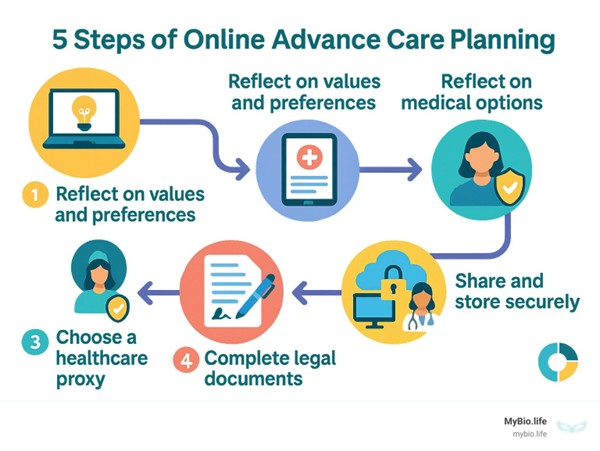
It’s easier than it sounds. You pick a trusted mobile app, write down what matters to you about your care, choose someone to speak for you, fill out the right forms, and share it with the people who need to know.
Maria shared her story: “After watching my parents struggle with choices for my grandmother, I knew I didn’t want my kids to go through the same thing. Now that my plan is online, they’ll know what I want.”
Online planning makes sense. You can get to it anytime, from anywhere. If your wishes change, you can update them in minutes. You can also share it easily with your family and doctors. Some websites even let you add a video, so people can hear you explain your choices yourself. More and more healthcare providers accept digital plans. Some websites offer free tools that are legally valid in Australia.
The best time to make a plan is now before there’s a crisis. It’s a way to make sure your voice is heard and your loved ones are supported.
What You’ll Learn in This Guide
We’ve created this guide to walk alongside you on your online advance care planning journey. Think of it as your friendly roadmap to preparedness, whether you’re 25 or 75.
Here’s what we’ll cover together:
- Why planning ahead matters for everyone, not just older adults or those with health concerns
- How digital directives differ from traditional paper documents (and why that matters in an emergency)
- Finding the right online platform that fits your comfort level with technology
- Creating legally sound documents that will stand up when they need to
- Keeping your sensitive information secure while making it available to the right people
- Sharing your wishes with family members and medical providers
- Updating your plan as life changes (because it always does!)
Whether you’re completely comfortable with technology or still getting used to digital tools, we have made this process easy and reassuring. After all, planning ahead ought not to feel overwhelming and needs to be empowering..
Why Advance Care Planning Matters
Think of advance care planning as creating a roadmap for your healthcare journey when you can’t steer it yourself. It’s the thoughtful process of considering and documenting what medical care you’d want if you couldn’t speak up. “Advance care planning is not about giving up,” explains the National Institute on Aging. “It’s about taking control of your care when you need it most.”
When you create an advanced care plan, you’re essentially answering some deeply personal questions:
- What treatments would align with your values?
- Who do you trust to be your voice?
- What does quality of life mean to you?
These aren’t casual questions, but they’re incredibly important ones.
By tackling these questions now, you’re creating clarity for yourself and those who care about you. You’re ensuring that your unique preferences and beliefs remain at the center of your care, even when you can’t advocate for yourself.
Key Reasons to Plan Ahead
Makes conversations flow naturally instead of awkwardly. Talking about serious illness or end-of-life care isn’t anyone’s idea of a fun chat. But online advance care planning tools provide helpful frameworks that guide these discussions, making them feel more natural and less overwhelming for everyone involved.
Spares your family from guesswork during stressful times. When medical crises happen (and they often happen suddenly), families can find themselves making gut-wrenching decisions without any guidance. With a digital advance care plan, you remove that burden of uncertainty.
As one healthcare provider shared: “I’ve seen families torn apart arguing about what Mom or Dad would have wanted. When there’s a clear advance directive, that tension dissolves, and they can focus on supporting each other instead.”
Ensures your preferences remain front and center, not lost in the shuffle. Without documented wishes, healthcare teams must follow standard protocols or rely on family members who might not know what you would truly want. Your digital plan keeps your voice in the conversation, even when you can’t physically participate.
Helps avoid unwanted healthcare costs that might otherwise burden your loved ones. Unnecessary treatments don’t just conflict with your wishes, they can create financial strain for those managing your affairs. Clear directives help prevent interventions you wouldn’t have chosen.
Brings genuine peace of mind to you and those who love you. There’s something deeply comforting about knowing you’ve made your wishes clear and accessible to those who will need this information.
Traditional vs Digital: Core Advance Care Planning Documents
When we talk with families about online advance care planning, we often start by explaining the essential documents. Understanding these basics helps you make smarter choices about going digital.
Living Will
A living will is your voice when you can’t speak for yourself. It outlines which medical treatments you’d accept or decline if you become terminally ill or unconscious. Think of it as your medical wish list that covers critical decisions about:
CPR if your heart stops, whether you want mechanical ventilation to help you breathe, tube feeding for nutrition, dialysis if your kidneys fail, and your preferences for comfort care. These choices are deeply personal and reflect your values about quality of life.
Healthcare Proxy (Medical Power of Attorney)
This might be the most important document you’ll create. Your healthcare proxy is the person you trust to make medical decisions when you can’t. Choose someone who really knows you; someone who will honor your wishes even if they personally disagree. The best proxies are good communicators who can stay calm under pressure and advocate effectively with medical teams.
Physician Orders for Life-Sustaining Treatment (POLST)
If you’re living with serious illness or frailty, a POLST form takes your wishes a step further. Unlike other documents that provide guidance, a POLST transforms your preferences into actual medical orders signed by your doctor. This bright-colored form is immediately actionable by EMTs and emergency room staff, no interpretation needed.
Do-Not-Resuscitate (DNR) Orders
A DNR addresses one specific situation: it instructs healthcare providers not to perform CPR if your heart stops or you stop breathing. It’s straightforward but powerful, especially for those with terminal conditions who want to avoid traumatic resuscitation attempts.
Comparing Traditional and Digital Formats
| Feature | Paper Documents | Digital Documents | Video Supplements |
| Accessibility | Must be physically present | Available anywhere with internet | Accessible online |
| Updating | Requires creating new documents | Simple online edits | Easy to re-record |
| Sharing | Physical copies needed | Instant electronic sharing | Shareable links |
| Clarity | May contain medical jargon | Interactive explanations | Personal expression |
| Storage | Physical storage needed | Cloud-based | Cloud-based |
| Legal Status | Universally accepted | Varies by state | Supplementary |
| Personal Touch | Limited to written text | Limited to text fields | Conveys emotion and nuance |
The problem with traditional paper documents isn’t their content, it’s their accessibility. I’ve heard countless stories of families frantically searching through file cabinets during emergencies, or worse, finding outdated directives that no longer reflect their loved one’s wishes.
Digital documents solve these problems. With online advance care planning, your documents are always available when needed. Many platforms now offer secure upload options for existing paper documents, giving you the best of both worlds… Legal validity plus digital accessibility.
The Rise of Online Advance Care Planning
Remember when we had to carry paper maps in our cars? Today, most of us rely on digital navigation without a second thought. The same evolution is happening with advance care planning, and for good reason.
The shift toward online advance care planning reflects our increasingly digital lives. Just as we manage our banking, shopping, and communication online, we can now handle this vital aspect of healthcare planning digitally too.
This digital change emerged from a simple but critical problem: paper documents often fail precisely when they’re needed most. Research paints a concerning picture… One study found that only 35% of patients’ advance directives were actually available in their hospital records during emergencies. That’s like having an insurance policy that disappears when you need to file a claim.
Several key developments have accelerated this digital revolution:
The widespread adoption of electronic health records (EHRs) has made it easier for healthcare systems to integrate digital advance directives into their existing workflows. Meanwhile, laws like the Uniform Electronic Transactions Act and E-SIGN Act have given electronic signatures the same legal weight as pen-and-paper ones in most situations.
Cloud computing now provides secure storage that makes your documents accessible from anywhere while maintaining strict privacy protections. And with smartphones and tablets in nearly everyone’s pocket, creating and accessing advance care plans can happen virtually anywhere, anytime.
Perhaps most importantly, improvements in interoperability standards mean healthcare systems can now share this critical information across different platforms and institutions – so your wishes follow you wherever you receive care.

Digital Advance Directives Explained
Think of digital advance directives as the online version of traditional paper documents, but with superpowers. Instead of physical papers that can be left in a drawer at home, damaged by water, or simply lost, digital directives exist in secure online environments where they’re always available when needed.
A typical digital advance directive includes electronic forms capturing the same information as paper documents, but with added features like legally-valid e-signatures, secure HIPAA-compliant storage, easy sharing capabilities, and simple updating features for when your preferences change.
According to the National Institute on Aging, the accessibility advantage of digital directives cannot be overstated. When stored in secure online repositories, your healthcare wishes can be accessed 24/7 from anywhere with internet connectivity – whether that’s an emergency room across town or a vacation destination thousands of miles from home.
Video Advance Directives: When & Why to Use Them
One of the most heartfelt innovations in online advance care planning is the addition of video recordings. These allow you to explain your wishes in your own words, adding a personal dimension that words on a page, digital or physical, simply cannot convey.
Video directives solve several important challenges that traditional documents face. For one, written instructions can sometimes be interpreted differently by different people. But seeing and hearing someone express their wishes leaves much less room for misunderstanding. Your facial expressions, tone of voice, and emotional nuances help family members and healthcare providers better understand not just what you want, but why it matters to you.
“When I see a patient’s video directive, I get a much clearer sense of who they are as a person,” shared one physician. “It transforms them from a set of medical directives to a human being with values, beliefs, and a life story. That context is invaluable when making difficult decisions.”
Videos can also demonstrate that you were of sound mind when making your decisions, potentially preventing challenges to your advance directive later. But perhaps most powerfully, for family members facing heart-wrenching choices during a medical crisis, seeing and hearing your voice provides comfort and reassurance that they’re truly honoring what you would have wanted.
It’s worth noting that video directives typically complement rather than replace legally binding written documents. They provide the context and clarification that bring your formal directives to life, helping ensure your care truly reflects the person you are.
Step-by-Step: How to Create Your Plan with Online Advance Care Planning Tools
Planning your care online is simply about saying what you want, so the people close to you aren’t left guessing. Let’s take it one step at a time.
1. Reflect on Your Values and Preferences
Before diving into any platform or form, take a quiet moment to think about what truly matters to you. What makes your life meaningful? What circumstances would make life unacceptable to you? How do you feel about treatments that might extend your life but not restore your quality of life?
These aren’t easy questions, but they’re vital ones. Many online advance care planning tools include helpful exercises to guide this reflection process. One user shared with us, “I was surprised how much clarity I gained just from the guided questions. They helped me articulate feelings I’d never put into words before.”
2. Research State-Specific Requirements
Advance directives aren’t one-size-fits-all, they vary by state. Some states require two witnesses, others need notarisation, and requirements for electronic signatures differ too. The good news? Most quality platforms automatically adjust their forms to meet your state’s legal requirements, taking this burden off your shoulders.
3. Choose the Right Digital Platform
With your values clarified and state requirements understood, it’s time to select a platform that feels right for you. At MyBio.life, we have created a comprehensive digital life management system where your advance care planning documents live alongside other important life documents, all in one secure place.
When evaluating different platforms, consider factors like security certifications (look for HIPAA compliance), user-friendliness, cost structure, and whether they offer multilingual support if you need it. The right platform should feel intuitive and reassuring, not complicated or confusing.
4. Create Your Digital Advance Directive
Now comes the documentation phase. Good platforms will guide you step-by-step through:
Completing your living will sections where you specify treatment preferences Designating your healthcare proxy, the person you trust to speak for you Adding personal messages or specific instructions not covered in standard sections
Don’t worry about medical jargon, quality platforms explain terms in plain language. As one physician told us, “The best online tools translate complex medical decisions into questions anyone can understand.”
5. Address Legal Requirements
Making your documents legally binding is crucial. Depending on your state, you might need:
Witness signatures – Some platforms now offer remote witnessing options notarisation – Several states now permit online notarisation Electronic signatures – These must comply with your state’s requirements
6. Record Video Supplements (Optional)
One of the most powerful features of online advance care planning is the ability to record video messages explaining your choices. These videos don’t typically replace your legal documents, but they add clarity and emotional context that paper forms simply can’t convey.
Find a quiet spot with good lighting, dress comfortably, and speak from the heart. Explain your values and the reasoning behind key decisions. Keep videos relatively brief (5-10 minutes) so they remain focused and easy to review.
7. Share Access Appropriately
Your advance care plan only works if the right people can access it when needed. Consider sharing with:
Your healthcare proxy – They need full access to honor your wishes Close family members – Even if they’re not your proxy, keeping them informed reduces confusion Your primary doctor – Medical teams need this information during emergencies Specialists managing your chronic conditions
Most platforms let you control exactly what each person can see and whether they can download copies.
8. Set a Review Schedule
Life changes, and so might your wishes. Plan to review your advance directives:
Annually on a memorable date like your birthday after major life events like marriage, divorce, or a new diagnosis. When moving to a new state with different laws As your values evolve over time.
Mark these review dates in your calendar, they’re as important as regular check-ups.
Choosing the Right Platform
When selecting an online advance care planning platform, think about what matters most to you:
Do you prefer a free basic service or are you willing to pay for premium features? Are you looking for a one-time purchase or comfortable with a subscription? Does the platform offer family plans if you want to get loved ones on board too?
Security ought to be non-negotiable. Look for HIPAA compliance, HITRUST certification, strong encryption, and two-factor authentication. The user experience should feel intuitive, with clear explanations of medical terms and mobile-friendly design.
At MyBio.life, we’ve built our platform with both security and simplicity in mind. Our digital vault securely stores not just your advance directives but all your important life documents, creating a complete picture of your wishes that’s accessible when needed.
Recording a Video Directive
If you decide to create a video supplement, think of it as a personal message to your loved ones and healthcare providers. Begin by stating your name and the date, confirm you’re making these decisions voluntarily, and then explain your values regarding healthcare.
Address specific treatments mentioned in your written directive and acknowledge your healthcare proxy. Keep it under 10 minutes, brevity ensures people will watch it completely when it matters most.
As one user told us, “Recording my video was emotional, but knowing my family will hear directly from me if difficult decisions need to be made gives me incredible peace of mind. It’s the closest thing to being there to guide them.”
For more comprehensive information about planning for your future, visit our More info about Estate Planning section.
Ensuring Legal Validity, Security & Accessibility
Creating your advance care plan online is one thing – making sure it works when you need it most is another. Let’s talk about how to ensure your digital plans are legally sound, secure, and available exactly when needed.
Legal Validity
The good news is that online advance care planning has become increasingly accepted across the country. However, just like traditional paper documents, digital directives need to follow certain rules to be legally binding.
Each state has its own requirements – some need two witnesses watching you sign, others require a notary’s stamp, and a few states are particular about the exact wording on the forms. Quality online platforms will automatically adjust to your state’s rules, but it’s worth double-checking what your state requires.
“I was concerned about using digital documents for something so important,” shares Maria, a MyBio.life user. “But I learned that federal laws like UETA and E-SIGN actually protect electronic signatures, making my online directives just as valid as paper ones.”
For peace of mind, especially if your situation is complex, consider having an attorney review your completed documents. Some platforms offer legal review services built right in. The stronger your identity verification during document creation – through methods like two-factor authentication or biometric verification – the more solid your legal standing will be.
Security Considerations
Your advance care planning documents contain some of your most personal information. Keeping this data secure is absolutely essential.
Look for platforms that use bank-level security measures like AES-256 encryption, which protects your information both while stored and when being sent. Good security also means strong access controls; who can see what, and when they can see it.
“When choosing where to store my advance directives,” explains James, a healthcare professional, “I specifically looked for HIPAA compliance and HITRUST certification. These aren’t just fancy terms – they mean the platform has been rigorously tested for security.”
At MyBio.life, we take your privacy seriously. We’ve implemented multiple layers of protection while still making sure your information remains accessible to those you trust when they need it most. Our platform maintains detailed records of who has viewed your documents and when providing complete transparency.
Accessibility When Needed
Even the most legally sound, perfectly secure advance directive won’t help if doctors can’t access it during an emergency. This is where digital planning truly shines compared to paper documents.
Modern platforms offer multiple ways to access your information; through smartphone apps, any web browser, and sometimes through direct connections to hospital systems. Many provide wallet cards with QR codes that emergency personnel can scan to immediately access your critical information.
The best platforms work on integration with healthcare systems. This means your advance directives can potentially be pulled directly into your electronic health record (EHR), making them immediately visible to your healthcare team when decisions need to be made quickly.
Making Your Online Advance Care Planning Legally Binding
To give your digital directives the strongest legal foundation possible, follow these important steps:
First, make sure you have met your state’s formal requirements. While most states now recognize electronic advance directives, they typically still need the same elements as paper documents – your signature, the date, and depending on your state, witness signatures or notarisation.
Some states have been slower to accept fully digital processes. In these cases, a hybrid approach works well: complete everything online, print for physical signatures, then upload the signed documents back to your digital platform. Keep those original signed copies somewhere safe, too.
Remember to inform key people about your directives and how to access them – your healthcare proxy, their backup, your doctor, and close family members need to know where to find your wishes in an emergency.
Carry a wallet indicator card (provided by many platforms) that tells emergency responders you have an advance directive and how to access it. These small cards can make all the difference in ensuring your wishes are known during critical moments.
If you move to a new state or spend significant time in multiple states, review your directives to make sure they comply with local laws. What works in California might need adjustments in Florida.
Keeping Your Data Safe
While your chosen platform handles much of the security, you play an important role in protecting your information too.
Create a strong, unique password for your advance care planning account – ideally one you don’t use anywhere else. Consider using a password manager to help keep track of complex passwords securely. And remember, even with family members, use the platform’s proper sharing features rather than sharing your actual account credentials.
Keep your devices secure by installing updates promptly, using fingerprint or facial recognition when available, and always logging out when using shared computers. Regularly review who has access to your documents and update permissions if relationships change.
“I check my access logs every few months,” says Theresa, who manages her family’s digital planning. “It gives me comfort knowing exactly who has viewed our documents and when.”
Download local copies of important documents, share copies with trusted individuals, and consider keeping hard copies in a secure physical location like a fireproof safe or safety deposit box.
By taking these thoughtful steps to ensure legal validity, security, and accessibility, your online advance care planning documents will serve their purpose when it matters most – giving you and your loved ones the peace of mind you deserve.
Sharing, Updating & Integrating Your Plan with Other Life Documents
An advance care plan isn’t something that exists in isolation, it’s one important piece in the broader puzzle of life planning. At MyBio.life, we understand how your healthcare wishes connect with all your essential life documents.
Sharing Your Plan Effectively
The true power of online advance care planning shines when the right people can access your information exactly when they need it:
Your healthcare team needs to be first on your sharing list. During your next checkup, mention to your primary doctor that you have created an advance directive online. Many physicians will appreciate your proactiveness and ask how they can access it. If you’re managing a chronic condition, extending access to your specialists ensures everyone on your medical team understands your wishes.
“When my father had his stroke, the hospital had no idea about his wishes,” shares Maria, a MyBio.life user. “Now that my own advance directive is digitally stored and shared with my doctors, I know I won’t put my children through that same uncertainty.”
Family members form your second circle of sharing, and be selective. Your designated healthcare proxy obviously needs access, as do any alternate decision-makers you’ve named. Adult children or siblings who might be involved in your care should be included, but remember: not everyone needs to see everything. Most digital platforms let you customize permission levels, from simple viewing access to the ability to receive update notifications or download copies.
Don’t forget your legal representatives. If you have an attorney handling your estate planning, ensuring they have a copy of your advance directives helps maintain consistency across all your end-of-life documents.
Integrating with Other Life Documents
Your advance care plan works hand-in-hand with other important life documents to create a complete picture of your wishes. At MyBio.life, our comprehensive approach helps you connect these pieces:
Your will and advance directive should complement each other. While they serve different purposes, one addressing your property and assets, the other your healthcare wishes, they need to reflect consistent values. When these documents work together, you prevent potential conflicts that could arise during already stressful times for your family.
Life insurance policies also play an important role in your overall planning. Beyond naming beneficiaries, these policies might help provide for potential long-term care needs that could arise from situations described in your advance directive. Keeping these aligned gives your family financial breathing room during medical crises.
Don’t overlook your online presence. Digital asset instructions help your loved ones manage your social media accounts, access important online files, and handle subscription services. At MyBio.life, our secure digital vault gives you one protected location for all these elements.
Many people don’t realize that pet care instructions belong in comprehensive life planning. If you’re hospitalized or unable to care for your beloved animals, having documented their veterinary information, medication needs, and daily routines ensures they will receive proper care. As one user told us, “Knowing my golden retriever’s care plan is included alongside my own healthcare wishes gives me complete peace of mind.”
Personal messages, Wills, and legacy documents add a deeply meaningful dimension to your planning. These might include letters to loved ones, your values and life lessons, or preferences for funeral and memorial arrangements. These personal touches transform clinical documents into a more complete expression of who you are.
Best Practices for Regular Reviews
Advance care planning isn’t a “set it and forget it” task, it requires thoughtful review as your life evolves:
Mark your calendar for regular check-ins. Many people choose their birthday or the start of a new year as their annual review date. During these reviews, ask yourself if your wishes have changed based on new life experiences or values.
Pay attention to important events that signal it’s time for an update. These might include significant health changes, family transitions like marriage or divorce, or moving to a new state with different legal requirements. After my mother was diagnosed with dementia, I completely rethought my own advance directive,” shares Robert, a MyBio.life member. “What I considered ‘quality of life’ shifted dramatically after seeing her experience.”
When you do make changes, be methodical. Note the date of your review, record what you’ve updated, and most importantly, notify your healthcare proxy and providers about significant changes. Online advance care planning platforms make this process much simpler than with paper documents, no need to track down multiple copies or wonder if someone has the latest version.
Bringing Healthcare Providers On Board
For your digital advance directive to truly serve its purpose, your healthcare providers need to be active participants:
During routine appointments, make a point of mentioning your advance directive. Ask how they prefer to receive it, many practices now have systems for incorporating digital documents into your medical record. Some hospitals and clinics offer patient portals where you can upload your directive directly.
When you’re admitted to a hospital, speak up about your advance directive right away. Tell the admitting staff you have digital advance care planning documents and provide access information. Request that your directive be prominently noted in your chart so all care team members are aware.
With specialists, share your directive before your first appointment when possible. This gives them context for understanding your overall healthcare values and preferences. These conversations can be especially valuable with specialists who deal with serious or chronic conditions that might eventually intersect with your advance directive.
While healthcare systems are increasingly embracing digital documentation, the transition isn’t complete everywhere. You might need to be your own advocate to ensure your carefully prepared wishes are properly incorporated into your medical records.
At MyBio.life, we believe that your advance care plan is an integral part of your complete life story. Our secure platform helps you create connections between all your important documents, ensuring that nothing gets lost and everything works together to honor your wishes.
Frequently Asked Questions about Online Advance Care Planning
How do my loved ones access my plan in an emergency?
Most digital platforms offer several thoughtful solutions for emergency situations. You might carry a wallet card indicating you have an advance directive and instructions for accessing it. Many services also provide emergency contact features, where your designated people can quickly gain access when needed.
At MyBio.life, we have designed multiple pathways for emergency access while maintaining strong security protocols. We believe your information should be completely private until the moment it needs to be shared.
Are there free online advance care planning options?
Yes! Several quality free options exist if you’re just getting started:
Many state health departments offer complimentary advance directive forms through their websites. Various nonprofit organisations provide downloadable forms at no cost, and several reputable healthcare websites offer free advance directive forms for all 50 states. Some healthcare systems even provide digital planning tools to their patients.
While these free options cover the basics, premium services like MyBio.life offer additional benefits that many people find valuable, integration with other life documents, improved security features, sophisticated sharing capabilities, regular update reminders, and friendly customer support.
Can I include specific treatments or clinical trials in my online directive?
Absolutely! Your advance directive needs to reflect your unique wishes, not just standard medical options.
Most digital platforms include sections where you can specify participation preferences for clinical trials, treatments you particularly want or wish to avoid, cultural or religious considerations, and personal care preferences that matter to you.
If you have very specific medical situations in mind, consider talking with your healthcare provider to ensure your instructions are clear and medically appropriate. They can help you phrase your wishes in ways that will make sense to future medical teams.
Online advance care planning platforms are designed to capture these nuanced preferences that make your care plan truly personal.
What happens if I change my mind after creating my directive?
Life changes, and so might your wishes, that’s actually one of the greatest advantages of digital planning!
If your preferences evolve, simply log into your account, make your changes, complete any required re-authentication steps, and save the updated version. Most platforms maintain version history, allowing you to track changes over time, and some automatically notify your designated contacts when significant updates occur.
You can change your advance directive at any time as long as you have decision-making capacity. That’s why online advance care planning offers such peace of mind, your documents can evolve as your life and wishes do.
Conclusion & Next Steps
Completing your online advance care planning journey isn’t just another task checked off your to-do list, it’s truly one of the most meaningful gifts you can give to yourself and the people you love. By documenting your healthcare wishes digitally, you’re making sure your voice remains heard even when you can’t speak for yourself.
At MyBio.life, we’ve built our platform specifically to make this process feel natural and comprehensive. Our secure digital vault isn’t just for your advance directives, it protects all your essential life documents, from wills and insurance policies to those heartfelt personal messages and even instructions for caring for your beloved pets.
Taking control of your healthcare future doesn’t have to feel overwhelming. Start by simply reflecting on what matters most to you when it comes to medical care. Then research what your specific state requires to make your documents legally binding.
When you’re ready, register with a trusted platform like MyBio.life where your information will be protected with bank-level security. Record your wishes through user-friendly digital forms, and consider adding that personal touch with optional video messages that can provide comfort and clarity to loved ones.
Life changes, and so might your wishes. Review your plans yearly or after significant life events like marriages, births, or new health diagnoses. Make sure to reach out to your healthcare providers so they know your plans exist and how to access them. Finally, reassure your family by sharing appropriate access, they’ll appreciate knowing exactly what you want instead of having to guess during an already stressful time.
Get started with comprehensive end-of-life planning